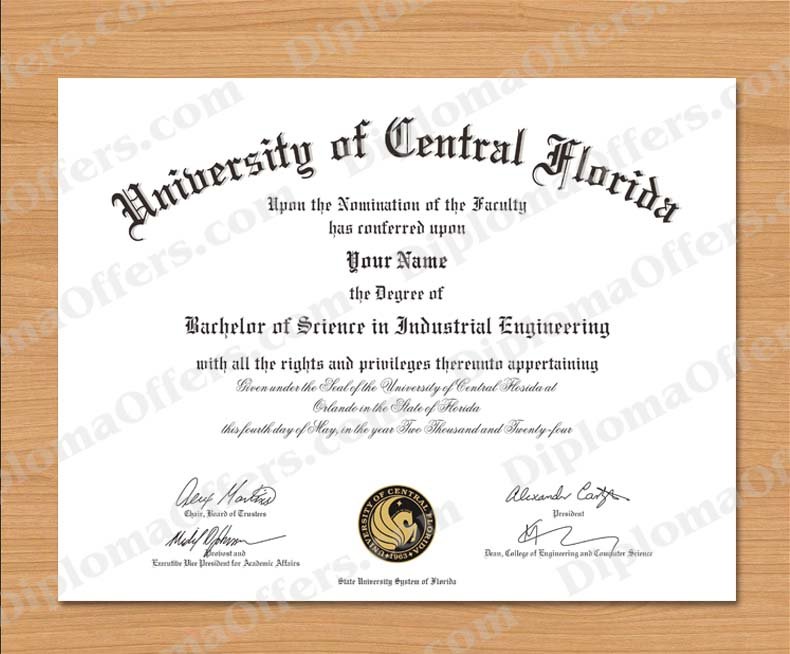
To get a replacement diploma, contact the registrar of the school that issued it and ask for a reissued or duplicate diploma. Expect a fee of roughly $10–$50, a signed request form, proof of identity, and a wait of two to eight weeks. If the school has closed, the request goes to the district, the successor institution, or the state archive.
Most people assume the process is harder than it is. The real obstacles are knowing which office holds the record and knowing which of three documents you actually need.
Three different things people call a “replacement diploma”
| What you ask for | What you get | Typical use |
|---|---|---|
| Reissued diploma | A new diploma document, printed and signed now | Replacing a lost or damaged award |
| Duplicate diploma | A copy of the original from the institution’s file | When the original wording and date must match |
| Verification letter | A signed statement that the record exists and what it shows | Employers, licensing and background checks |
Many institutions can issue only the verification letter, not a new diploma. That is not a refusal — it is a records policy. Ask which of the three they can provide before you fill in anything.
Step by step
- Identify the issuing body. The school if it is open; the district if it closed but the district survives; the state archive or department of education if both are gone; the successor institution if the school merged.
- Ask for the records office, not the front desk. "Who handles diploma reissues?" saves a round of being transferred.
- Request the form. Most are PDFs; some are online portals. A few districts still require a notarised signature.
- Gather your details — the name as enrolled, graduation year or last year attended, date of birth, student ID if you have it, and any name-change documentation.
- Pay the fee. Card or cheque, depending on the district. Ask for a receipt reference.
- Wait, then verify on arrival. Check the spelling of your name, the graduation date and the institution name before you frame or file it. Corrections are easier in the first weeks.
Cost and timeline
| Route | Typical fee | Typical wait |
|---|---|---|
| High school registrar | $10–$30 | 2–6 weeks |
| College or university registrar | $20–$50 | 2–8 weeks |
| District office (closed school) | $0–$25 | 2–6 weeks |
| State archive (school and district gone) | $0–$30 | 4–12 weeks |
| Rush service, where offered | +$25–$75 | 3–10 days |
Diploma reissues are slower than transcripts because they are usually produced in batches rather than printed on demand. If you need something quickly for an employer, a verification letter or an official transcript is almost always faster — see how to request a transcript.
If the school has closed
Start with the district office: "where are the student records for [school], closed in [year]?" That single call resolves most cases. If the district is also gone, the state archive or department of education holds the records. If the school merged, the successor institution carries them.
The full decision tree, including what to do when nothing survives, is in school closed: how to get your records.
If the institution says no
Three reasons come up repeatedly, and each has a workaround:
- "We destroy records after X years." Ask where the archive went. Records are usually transferred, not destroyed, especially for graduates.
- "We cannot verify your identity." Offer additional documentation: a birth certificate, a marriage certificate, an old report card, a yearbook entry.
- "We only issue transcripts." Accept the transcript plus a verification letter. For most purposes that combination is accepted even where a diploma is asked for.
What a replacement diploma is not
It is not a display copy. A replacement diploma is issued by the institution and carries its record; a display reproduction is a decorative object with no standing. If what you want is something to hang on a wall because the original is lost, that is a different and much cheaper problem — covered in lost diploma: what to do.
It is also not a copy you can make yourself. Photocopies and scans are useful for your own files, but no employer or registrar treats them as verification.
What to send with the request
A request is rejected or delayed most often because something is missing. Have these ready before you submit:
- A copy of photo ID
- The name as enrolled, plus any name change documentation
- Graduation year, or the years you attended
- Date of birth
- Student ID or Social Security number, if the form asks
- The fee, paid the way the office accepts it
- A postal address that will still be current in eight weeks
If you need to use it abroad
A replacement diploma from a US institution is not automatically accepted in another country. Using it abroad usually requires two extra steps, in this order:
- Notarisation — a notary confirms the signature or the copy. Many will not notarise a document they cannot verify, so ask the institution whether they provide a notarised or certified copy directly.
- Apostille or consular legalisation — an apostille certifies the signature of the official who signed, not the content. For countries in the Hague Convention it is issued by the state secretary of state; for others, consular legalisation is needed.
Translation may also be required, and some authorities only accept translations from approved translators. Ask the receiving body what it accepts before you pay for any of it.
Common questions
Can I get a replacement diploma online?
You can usually submit the request online, but the diploma itself comes from the institution. Sites that sell a "replacement diploma" without involving the school are selling a novelty item, not a replacement.
How long does it take?
Two to eight weeks for a school or district, longer for a state archive. Rush services exist but are not universal.
Do I need a police report if it was stolen?
Some institutions ask for one when the diploma was stolen rather than lost. It costs nothing to report it and can speed up the request.
Will the replacement have the original date?
Usually yes — it shows the original conferral date, plus sometimes a reissue note. Ask which they do, because it affects whether it matches an old photograph or frame.
Does the size change?
Sometimes. Institutions change stationery over the years, so a reissue may not match the original dimensions, which matters if you are reusing a frame. Sizes are covered in what size is a diploma.
Everything sold on this site is a novelty reproduction for display, keepsake and prop use. It is not an official record and cannot be used to verify a qualification.