A diploma spends years in a drawer before anyone thinks about framing it — and by the time it goes on the wall, most people discover the same two problems: they don’t know the correct frame size, and they’re not sure whether it’s safe to mount the document at all.
This guide covers the practical side: measuring your document, choosing a mat and frame, protecting the print from fading, and mounting it in a way you can undo later. Everything below applies equally to an original diploma and to a display copy.
Start by measuring the document, not the frame
Diplomas are not one standard size. US schools most often issue 8.5 × 11 inch documents, but 8 × 10, 9 × 12 and 11 × 14 also appear. Schools outside the US usually follow A4 or A3. Measure the paper itself — width first, then height — and write the numbers down before you shop.
| Document | Size (inches) | Size (mm) |
|---|---|---|
| US high school diploma | 8.5 × 11 | 216 × 279 |
| US college / university diploma | 8.5 × 11 (some 8 × 10 or 9 × 12) | 216 × 279 |
| A4 (common in the UK, EU, AU) | 8.27 × 11.69 | 210 × 297 |
| A3 | 11.69 × 16.54 | 297 × 420 |
| Presentation / oversized | 11 × 14 | 279 × 356 |
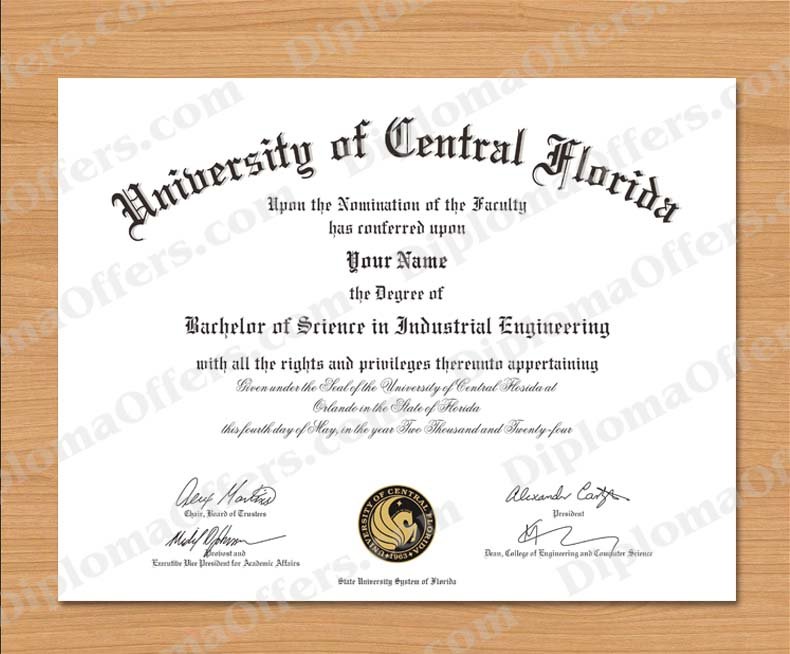
Two details trip people up. First, a document that is slightly larger than A4 will not fit an A4 frame no matter how carefully you center it — go up a size. Second, if the diploma has a decorative border or seal near the edge, you need visible margin around it, which means a larger frame than the paper dimensions suggest.
Give it a mat — ideally two
A mat does three jobs: it keeps the glazing off the paper, it gives the eye room around the text, and it makes a modest 8.5 × 11 document look deliberate on a large wall. For most diplomas, a mat border of 2 to 3 inches works well. Anything under 1.5 inches tends to look cramped; anything over 4 inches starts to swamp the document.
One classic framing trick: make the bottom border slightly wider than the sides and top. The difference is small — a quarter to half an inch — but it visually lifts the document so it doesn’t appear to sink in the frame.
A double mat (a narrow inner accent line plus a wider outer mat) suits diplomas particularly well because the inner line can pick up the seal color or the school’s colors without competing with the text.
Choose glazing that filters UV
Paper yellows, and ink fades. Direct sunlight accelerates both, and standard glass filters almost none of the ultraviolet light that causes it. If the diploma will hang anywhere with daylight, use UV-filtering glazing — either conservation glass or UV-filtering acrylic.
Acrylic has practical advantages for larger frames: it weighs far less and resists shattering, which matters if the frame hangs above a desk or in a hallway. Glass is more scratch-resistant and looks slightly clearer. Either is fine as long as it is rated for UV filtering.
Mount it so you can undo it later
There are three common approaches, and only one is a good default for a document you care about.
- Photo corners (recommended). Small archival corners hold the paper without adhesive touching it. Fully reversible, and the document can be removed years later with no residue.
- Hinging with linen tape. A strip of acid-free linen tape attaches the top edge of the document to the backing board. Also reversible, but it requires more care to place neatly.
- Dry mounting (avoid for originals). The document is bonded permanently to a board. It looks perfectly flat, but it cannot be undone, and it usually reduces the document’s value. Acceptable for a low-cost display copy; not for something you may need to present or pass on.
Whatever you choose, use acid-free backing board. Standard cardboard is acidic and will stain the paper over time.
Where to hang it
Location matters more than most people expect. Keep the frame out of sustained direct sunlight, away from bathrooms and kitchens where humidity swings, and off exterior walls that stay cold. A steady indoor environment of roughly 40–50% relative humidity and normal room temperature is ideal. Attics, basements and garages are the three worst places for paper.
Display ideas that look intentional
- The single statement frame. One document, wide mat, thin dark frame, centered at eye level on a plain wall. This is the safest choice and it always looks considered.
- The gallery wall. Diploma, transcript or certificate, and a photo or two, hung as a group with consistent spacing. Keep the frames the same finish so the group reads as one object.
- The shadow box. A diploma plus a tassel, cap pin or program in a deep frame. This works especially well for graduation gifts.
- The office shelf. A small easel frame on a desk or bookshelf, angled slightly. No mounting needed, and it’s easy to move.
When a display copy makes more sense
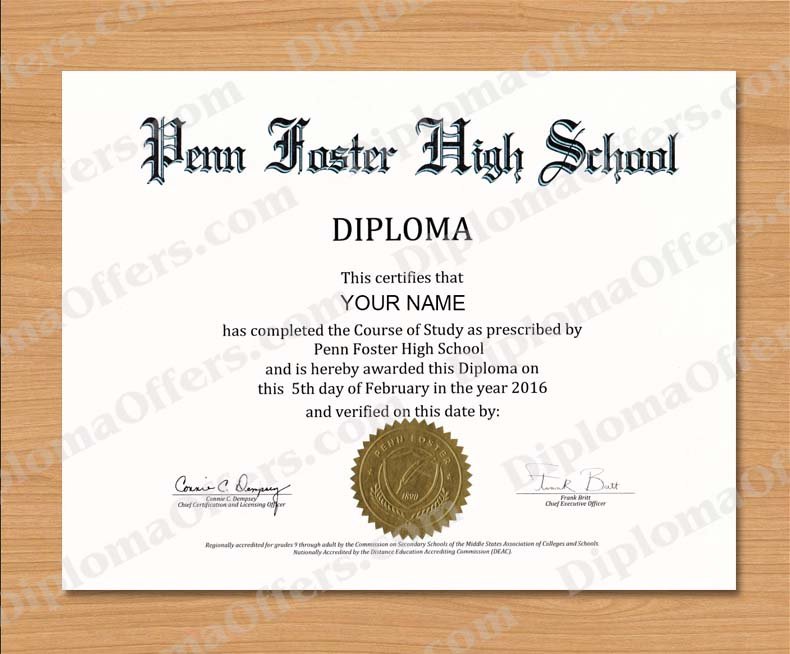
Many people frame a replica rather than the original — not to pass it off as anything else, but because the original stays safely stored while a faithful copy takes the sunlight, the humidity and the occasional bump. A novelty replica can also be produced in the size and layout that suits a specific frame, which solves the “nothing fits this odd 9 × 12 document” problem.
If that’s the route you’re taking, it helps to decide on the frame size first, then order the document to match. Our diploma covers and presentation cases pair well with a framed copy, and you can see the range of documents — from high school diplomas to degree diplomas — before you commit to a frame.
Worth being explicit: these are novelty reproductions made for display, keepsakes and props. They are not official records and cannot be used to verify qualifications. For anything that needs to be presented formally, order a replacement from the issuing school.
Common questions
Should I frame the original diploma or a copy?
If the document has sentimental or financial value, frame a copy and store the original flat, in an acid-free folder, away from light. If the original is already damaged, a frame can’t undo that — but a faithful copy will look clean on the wall.
What size frame do I need for a high school diploma?
Most US high school diplomas are 8.5 × 11 inches. With a 2-inch mat, that means an outer frame of roughly 12.5 × 15 inches. Measure your own document before ordering, since schools do vary.
Can I frame a diploma without a mat?
Yes, but the paper will sit against the glazing, which can trap moisture and cause the print to stick over time. If you skip the mat, at least use small spacers to hold the glass off the surface.
Will my diploma fade in a frame?
Not if you use UV-filtering glazing and keep it out of direct sun. Standard glass in a bright room is the most common cause of premature fading.
The short version
Measure the paper, add a 2–3 inch mat, choose UV-filtering glazing, mount with photo corners, and hang it away from sun and humidity. Do that and the document will look the same in ten years as it does today — whether it’s the original or a display copy.
Related guides
- Diploma Covers vs Frames: Which Should You Use? — cover or frame, and when to use both
- How Much Does a Replica Diploma Cost? — cost of a display copy to frame
- Associate vs Bachelor vs Master vs PhD: What’s the Difference? — how diploma sizes differ by degree level